Industry related headlines to keep you in the know.
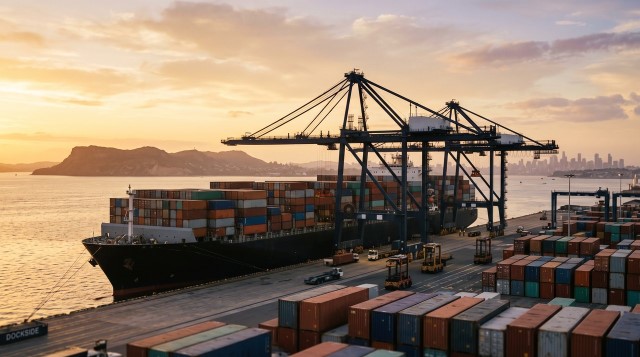
The International Container Terminal Services Inc. (ICTSI) consortium and Transnet have formally begun the management transition at Durban Container Terminal (DCT) Pier 2 — South Africa's flagship container facility and the gateway through which a majority of SADC's containerised imports and exports already move. The handover, confirmed in early May, marks the first time a private operator takes operational control at the country's busiest terminal under a 25-year concession.
Ports and Terminals
11 May 2026 • 5 min read
For nine years South African importers and exporters have watched Pier 2's crane productivity drift behind global benchmarks. The formal ICTSI transition resets the clock — and every freight operator across SADC has a direct interest in how the first 100 days play out.
After protracted legal challenges, court interdicts and political crosswinds that delayed the originally planned 2023 closure, ICTSI and Transnet have moved the Pier 2 concession from contract signature into operational transition. The Philippines-based terminal operator — the world's eighth-largest by throughput — now has roughly six months to assume operational control, hire and re-skill personnel, integrate IT systems, and absorb Pier 2's container book without disrupting weekly liner calls.
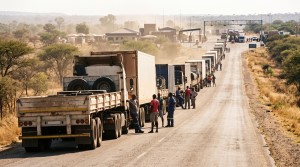
DCT Pier 2 handles around 2 million TEU annually and acts as the primary mainline call for almost every East-West service touching Southern Africa. For SADC traders moving freight through Beitbridge, Chirundu and Kasumbalesa, Pier 2's productivity is functionally the upstream constraint that defines truck turnaround, vessel wait times, and the price of a Durban-Copperbelt move.
The target: Lift gross crane moves per hour from the current ~18 to the global benchmark of 28-30 within the first 24 months, and rebuild DCT Pier 2 to a 2.8-million TEU annual capacity over the concession's first five years. (Source: Transnet / ICTSI concession submissions, 2026)
Unlike a greenfield port project, the Pier 2 transition is essentially a live engine swap. ICTSI inherits Transnet's existing labour complement, gantry cranes, straddle carriers, terminal operating system, and existing customer contracts. The early 100 days will focus on twin priorities: stabilising productivity at current levels while introducing ICTSI's own performance management, crane utilisation, and gate operations playbooks.
Capital investment is sequenced after stability. ICTSI's bid commits to phased equipment replacement, automation upgrades to the gate complex, and integration with the Durban port community system that already serves Maydon Wharf and the new fresh-produce concessions. Until that capex lands, near-term gains will come from operational discipline rather than new hardware.
Three operational signals will tell the SADC freight community whether the concession is succeeding before the official annual reports land. The first is dwell time: import box dwell at Pier 2 has averaged 6-7 days, well above the global 3-4 day benchmark. Any drop below 5 days during Q3 2026 will be the leading indicator that the transition is working.
The second is truck turnaround at the gate, currently averaging more than two hours per visit on peak shifts. The third is mainline vessel wait time at the anchorage, which still hits 4-5 days in congested weeks. Each of these directly determines the landed cost of a Durban-Lusaka or Durban-Lubumbashi container — and the price competitiveness of SADC export shipments leaving the same berths.
Do not bank on day-one improvements — the first six months are about stabilisation, not transformation. But operators should renegotiate freight contracts and inland haulage SLAs in 6-month windows tied to published Pier 2 KPIs, so that productivity gains accrue back to the customer rather than the carrier. SADC importers with Q4 2026 booking cycles should plan for measurable Durban improvements by November.
Stay connected with Southern Africa's freight and transport community.
Join 6,400+ logistics professionals across the SADC region.
Visit Laaimylorrie.com| About the Author | |

|
Andre Klynsmith Entrepreneur & Technology Enthusiast Andre's expertise spans technology, blockchain, transport, and logistics -- with a passion for innovation and driving positive change across industries. |
| Source: PortCalls Asia / Transnet / ICTSI Concession Filings View source › | May 2026 |


Subscribe to our Newsletter and stay in the know with all the latest Industry News, Products and Trends covering the whole of the SADC region.
KS Blockchain T/A Laaimylorrie.com . All Rights Reserved.