Industry related headlines to keep you in the know.
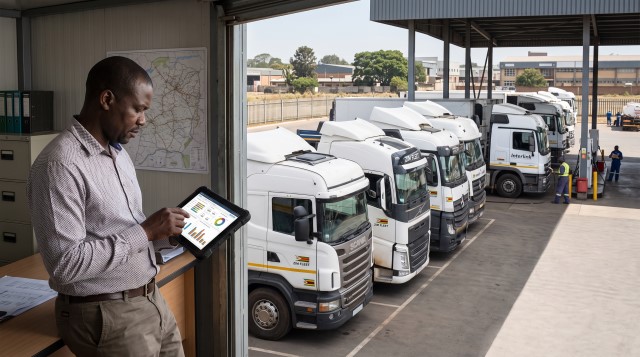
Zimbabwean diesel sat at US$2.09 a litre and petrol at US$2.08 in early May 2026, leaving the country with the second-highest pump prices on the continent and forcing domestic fleet managers into a survival reset that combines route truncation, driver behaviour programmes, lease-vs-own reviews, and asset-utilisation discipline of the kind not seen since the 2019 hyperinflation episode.
Fleet Management
7 May 2026 • 4 min read
Zimbabwe's pump price -- US$2.09 diesel, US$2.08 petrol in May 2026 -- is structurally above the regional median by roughly 30-40 percent. Fleet managers in Harare, Bulawayo, Mutare and Beitbridge are not waiting for the Walvis Bay hub. The operating playbook is being rewritten now, around what management can control today.
After an April adjustment, Zimbabwean petrol settled at US$2.08 and diesel at US$2.09 a litre, with subsequent volatility taking petrol briefly to US$2.23 in localised reports. Equity Axis and Zimeye documented a 39 percent surge in headline fuel prices over the prior 12 months, driven by ZERA's petroleum tax structure, currency convertibility frictions, and a thin domestic refining footprint that leaves the country fully import-dependent on refined product.
Authorities have publicly confirmed strategic stocks of more than three months' cover -- so the issue for Zimbabwean fleets is not availability, it is unit cost. At US$2.09 a litre, a 6x4 truck-tractor at 2.6 km/L incurs roughly US$0.80 a kilometre in pure direct fuel cost before any tyre, maintenance, driver, AdBlue or financing layer.
Zimbabwe May 2026 fuel snapshot: Petrol US$2.08 / litre; diesel US$2.09 / litre; second-highest pump prices in Africa; 39% YoY headline surge; >3 months strategic stock confirmed. (Source: Zimeye / Equity Axis / The Zambian Observer, May 2026)
Fleet managers from major Harare and Bulawayo operators are converging on a five-lever response. First, route truncation -- substituting one long Zimbabwe-internal leg with a multi-modal hand-off (rail or partner-truck on lower-cost corridors). Second, driver behaviour programmes -- aggressive idle-time reduction, anti-coasting telemetry, and incentive payments tied to litres-per-100km performance, with documented 4-7% fuel improvements achievable. Third, fleet right-sizing -- reviewing 6x4 deployment on routes where a 4x2 or rigid alternative would deliver the load at materially lower fuel burn.
Fourth, lease-vs-own renegotiation -- some operators are shortening lease terms to preserve flexibility ahead of an anticipated Walvis Bay hub-driven price drop in 2027/28. Fifth, fuel hedging through currency-protected supply contracts where USD-denominated billing can be matched against USD-receiving customer contracts.
Even SADC fleet managers based outside Zimbabwe need to track this. Any Zimbabwe leg in a cross-border route adds materially more fuel cost per kilometre than the South African or Zambian equivalent. Sub-contractor pricing into Zimbabwe will reflect this -- expect Harare-based partner haulier rates to remain elevated through 2026, and account for it in tender responses for any Zimbabwe distribution work.
The medium-term reset will come from the Walvis Bay Dangote-Afreximbank fuel hub. With its 2,000km pipeline targeting Bulawayo and a 15-20% delivered-cost reduction projected within 18 months of commissioning, Zimbabwean fleet economics could shift meaningfully in 2027/28. Until then, the discipline being built now -- driver behaviour, idle reduction, route truncation -- becomes a permanent capability.
Zimbabwean fleets need a five-lever survival reset (route truncation, driver behaviour, right-sizing, lease flexibility, USD-matched fuel hedging). Cross-border operators should price the Zimbabwe leg of any lane explicitly and renegotiate Harare sub-contractor rates accordingly. Build the new fuel discipline as a permanent capability -- the Walvis Bay relief is 2027/28, not 2026.
Stay connected with Southern Africa's freight and transport community.
Join 6,400+ logistics professionals across the SADC region.
Visit Laaimylorrie.com| About the Author | |

|
Andre Klynsmith Entrepreneur & Technology Enthusiast Andre's expertise spans technology, blockchain, transport, and logistics -- with a passion for innovation and driving positive change across industries. |
| Source: Zimeye -- Zimbabwe's Fuel Price Shock 39% Surge / The Zambian Observer -- Zimbabwe Hikes Fuel Prices Again View source › | May 2026 |


Subscribe to our Newsletter and stay in the know with all the latest Industry News, Products and Trends covering the whole of the SADC region.
KS Blockchain T/A Laaimylorrie.com . All Rights Reserved.