Industry related headlines to keep you in the know.
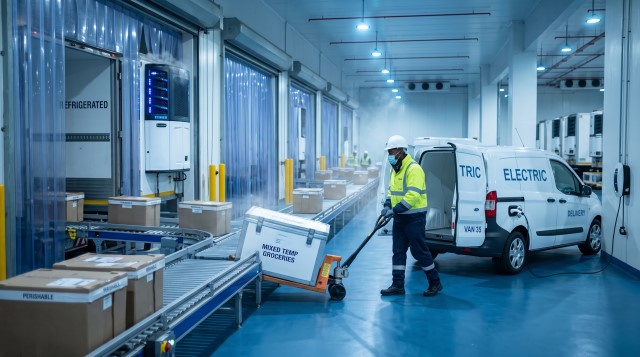
South African distribution operators are reshaping the most expensive segment of e-commerce -- the last-mile cold chain -- by routing mixed-temperature orders through cross-docking hubs that consolidate at the final leg. Early adopters report a 12% reduction in last-mile cost per drop, and the model is starting to extend into Botswana, Namibia, and Zimbabwe.
Distribution
6 May 2026 • 4 min read
Last-mile cold chain has always been the segment where margins die: low-density routes, residential access constraints, failed deliveries, and sustained temperature control across multi-stop trips. South Africa's click-and-collect surge has produced a pragmatic answer -- cross-docking hubs that consolidate hot, ambient, and frozen orders for the same drop window.
In a typical South African cold-chain operation, the final mile can absorb 40-50% of the total fulfilment cost on small-basket residential orders. Drivers spend more time at the door than between drops, failed deliveries trigger refrigerated re-routing, and sustained cold-hold across a multi-stop run pushes diesel and refrigeration unit (TRU) hours up significantly.
Post-pandemic click-and-collect models have changed the equation. Customers picking up at a store or pickup point cut the door-to-door problem entirely, but they introduce a new bottleneck at the consolidation point -- which is where cross-docking hubs come in.
The savings: Cross-docking hubs in South African urban centres are cutting last-mile cold chain costs by approximately 12% on click-and-collect mixed-temperature orders. (Source: Mordor Intelligence Africa Cold Chain 2026)
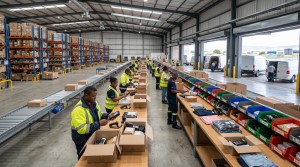
A cross-docking hub takes inbound consolidated loads -- from regional DCs, from suppliers, or from cold-store operators -- and re-mixes them at SKU level for outbound short-leg distribution. For mixed-temperature orders, that means pre-staging a customer's frozen, chilled, and ambient items into a single tote, in a single chamber, ready for handoff to a final-mile vehicle or pickup point.
The win comes from three places. First, fewer kilometres in refrigerated mode: long-haul refrigerated transport ends at the cross-dock, and final-leg vehicles can be smaller (or insulated rather than mechanically refrigerated). Second, fewer doors per drop. Third, easier exception handling: a failed pickup at the cross-dock means the order returns to a controlled-temperature environment, not to the back of a van that has been doing rounds for four hours.
The Africa cold-chain market is forecast to grow at a compound rate of around 9.7% in transportation through to 2034, with South Africa as the regional anchor. The cross-dock model is now appearing in Windhoek, Gaborone, and Lusaka, particularly for grocery delivery and e-pharmacy operators -- categories where temperature integrity is non-negotiable.
Harmonised SPS (sanitary and phytosanitary) standards across COMESA, EAC, and SADC are also reducing duplication of lab tests, encouraging operators to route perishables via land corridors rather than higher-cost sea trans-shipment. That tilts the regional cold chain toward a network of cross-dock hubs sitting on truck-corridor nodes.
If you carry mixed-temperature loads into urban catchments, model the impact of inserting a cross-dock between long-haul cold transport and last-leg delivery. Even a partial conversion of click-and-collect volume can recover 10-12% in last-mile cost while improving temperature compliance -- and the model scales naturally into Windhoek, Gaborone, and Lusaka as e-grocery footprints expand.
Stay connected with Southern Africa's freight and transport community.
Join 6,400+ logistics professionals across the SADC region.
Visit Laaimylorrie.com| About the Author | |

|
Andre Klynsmith Entrepreneur & Technology Enthusiast Andre's expertise spans technology, blockchain, transport, and logistics -- with a passion for innovation and driving positive change across industries. |
| Source: Cold Chain SA / Mordor Intelligence Africa Cold Chain Report View source › | April 2026 |


Subscribe to our Newsletter and stay in the know with all the latest Industry News, Products and Trends covering the whole of the SADC region.
KS Blockchain T/A Laaimylorrie.com . All Rights Reserved.