Industry related headlines to keep you in the know.
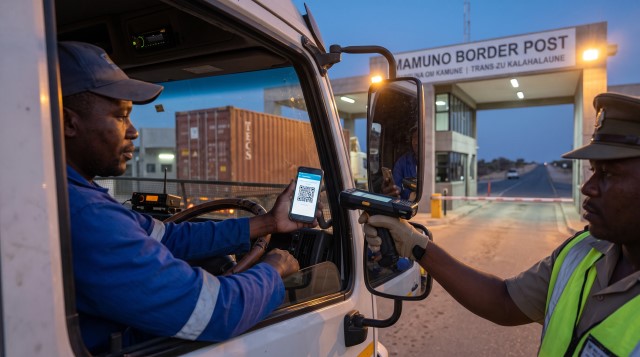
SADC governments and the Cross-Border Road Transport Agency (C-BRTA) have moved into the regional adoption phase of the Cross-Easy digital permit system -- a single, electronic cross-border road transport permit that aims to replace the current patchwork of national-level permits and physical paperwork across all 12 SADC member states.
Politics Insight
5 May 2026 • 4 min read
Cross-border freight in SADC is still throttled by permit fragmentation. Operators running between Walvis Bay and Lubumbashi can carry six different permits and three sets of road-user-charge receipts on a single trip. Cross-Easy aims to compress all of that into a single digital credential -- and the regional rollout discussions are now moving past pilot.
The Cross-Easy Permit application system was developed by the C-BRTA in South Africa and runs as the country's official digital cross-border permit channel. The 2026 stage of work, agreed at recent SADC Transport Coordinating Committee level, is to engage the SADC Secretariat, the Trans-Kalahari Corridor (TKC) Secretariat and national transport ministries on adopting Cross-Easy as a regional baseline -- and integrating it with other corridor systems already in use, including the Corridor Trip Monitoring System (CTMS) and the SADC Digital Waybill.
The case for harmonisation is well-established: the SADC Protocol on Transport, Communications and Meteorology already commits member states to free movement of goods, but in practice operators face permit fees, vehicle licence fees, road access fees and toll charges that vary by country, by route and -- in some cases -- by border post. Removing the duplication is a 2026 priority for the SADC Industrialisation Strategy mid-term review.
Industry figure: Cross-border permit and road-user-charge friction is estimated by C-BRTA to add between 5% and 11% to the landed cost of long-haul SADC road freight, depending on route, country pair and load type. (Source: C-BRTA / SADC Secretariat, 2026)
The most immediate operator-level change is administrative: one application, one set of vehicle and operator details, one electronic credential validated at every border post in real time. The downstream effects are larger. Reciprocal recognition of road-user charges would remove the need for parallel cash payments at multiple borders. Integration with CTMS would let cleared vehicles move into a digital queue ahead of unpermitted ones at Beitbridge, Kasumbalesa and Chirundu. And linking Cross-Easy to the SADC Digital Waybill would mean that the same data set covers permitting, trip monitoring and customs pre-clearance.
For shippers, the operational implication is shorter and more predictable transit. Operators report that 30-60% of cross-border delay is attributable to documentary issues rather than physical congestion. A unified digital credential collapses much of that delay window into single-digit hours.
The harder side of the reform is fiscal. Cross-border permit fees and road-user charges are revenue streams for member states, road agencies and -- in several jurisdictions -- the C-BRTA itself. Migration to a unified credential requires a revenue-sharing or reciprocity formula that protects national fiscal positions while removing operator duplication. That is a negotiation, not just a software project.
The most likely 2026/27 path is therefore staged. Trans-Kalahari operators (NA-BW-ZA) are widely seen as the first corridor where Cross-Easy could go live regionally, given existing TKC institutional infrastructure. The North-South Corridor and Beira corridor would follow as data-sharing protocols mature.
Operators should onboard the Cross-Easy platform now if they are not already, and request inclusion in any TKC-corridor pilot from their national transport agency. Early-mover fleets will gain time and dwell-cost advantages of three to seven hours per cross-border trip once integration with CTMS goes live -- which compounds rapidly across multi-country routes.
Stay connected with Southern Africa's freight and transport community.
Join 6,400+ logistics professionals across the SADC region.
Visit Laaimylorrie.com| About the Author | |

|
Andre Klynsmith Entrepreneur & Technology Enthusiast Andre's expertise spans technology, blockchain, transport, and logistics -- with a passion for innovation and driving positive change across industries. |
| Source: C-BRTA / Freight News View source › | 5 May 2026 |


Subscribe to our Newsletter and stay in the know with all the latest Industry News, Products and Trends covering the whole of the SADC region.
KS Blockchain T/A Laaimylorrie.com . All Rights Reserved.