Industry related headlines to keep you in the know.
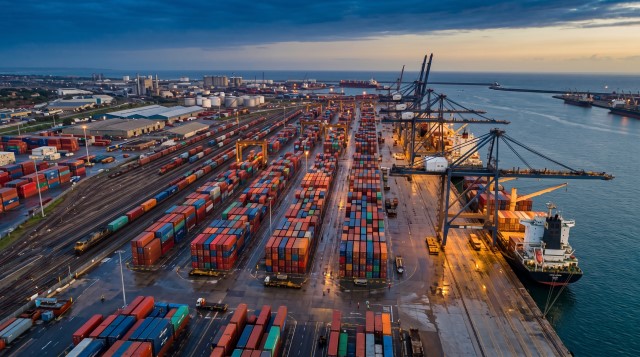
Transnet has set out a R125 billion five-year investment programme aimed at lifting cargo throughput from the current 170 million tonnes to 250 million tonnes by 2030 -- a step-change that will redraw port and rail capacity across South Africa and across the wider SADC freight network.
Ports and Terminals
5 May 2026 • 4 min read
After a decade of declining throughput, Transnet has confirmed a R125 billion infrastructure pipeline through 2030. For SADC operators routing through Durban, Richards Bay, Cape Town and Ngqura, this is the clearest signal yet that the structural recovery of South African ports and rail is now a costed plan, not an aspiration.
The R125 billion programme is aimed at moving Transnet's combined ports, rail and pipelines system from 170 million tonnes a year to 250 million tonnes by 2030 -- an uplift of roughly 80 million tonnes, or 47% above current volumes. Roughly half of the additional cargo is expected to come from rail, with the balance from container and bulk port expansion at Durban, Richards Bay, Cape Town and Ngqura.
The pipeline matters for SADC operators because South African ports remain the primary maritime gateway for landlocked Botswana, Zimbabwe, Zambia and the southern DRC. Capacity additions at Transnet's hubs feed directly into the through-rates and dwell times that operators see at Beitbridge, Kasumbalesa, Chirundu and Skilpadshek.
Industry figure: Transnet's R125 billion five-year programme targets an 80 million tonne lift in throughput by 2030, with a further interim target of 250 million tonnes of freight on rail by 2029 to support the broader logistics roadmap. (Source: Transnet / National Treasury, 2026)
The early-cycle priorities are container handling, bulk export rail and locomotive availability. The Durban Container Terminal Pier 2 -- now under ICTSI's management since 1 January 2026 -- is being upgraded toward a 2.8 million TEU annual capacity, while the wider Durban port is being positioned for an 11 million TEU footprint via the proposed 22.4-hectare Point Precinct reclamation project. Richards Bay is being recapitalised to lift coal throughput beyond 60 million tonnes a year, and Ngqura's manganese terminal is on track for private-sector concession participation.
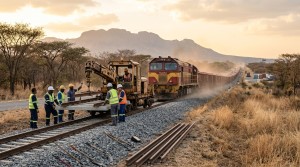
On the rail side, the parallel reform is the granting of conditional network access to 11 private train operators -- expected to add 20 million tonnes of new freight from the 2026/27 financial year across 41 routes and six key corridors. This dual track of state capex plus private operator entry is what makes the 250-million-tonne target look credible to most analysts for the first time in over a decade.
For freight forwarders and shippers across the region, the practical near-term implication is that the 2026/27 to 2028/29 window will be one of disrupted but improving capacity. New cranes, dredging and rail signalling work will create periodic productivity dips at terminals while the structural fix lands. Beira and Walvis Bay -- where Cornelder is expanding to 700,000 TEU and Terminal Investment Namibia recently received six new RTG cranes -- will continue to compete hard for diversion volumes during that transition.
The other implication is contractual. With 250-million-tonne capacity arriving in stages, operators that sign multi-year haulage and stevedoring agreements during the build-out are likely to lock in better slot economics than those waiting for the system to clear. The window for that pricing advantage is roughly 18 to 30 months long.
Plan around a two-track 2026-2028: keep using Beira, Walvis Bay and Maputo as relief valves while Transnet's R125 billion capex lands, then renegotiate volume agreements as Durban, Richards Bay and Ngqura productivity recovers. Operators with multi-port routing options will absorb the transition far better than those locked into a single SA gateway.
Stay connected with Southern Africa's freight and transport community.
Join 6,400+ logistics professionals across the SADC region.
Visit Laaimylorrie.com| About the Author | |

|
Andre Klynsmith Entrepreneur & Technology Enthusiast Andre's expertise spans technology, blockchain, transport, and logistics -- with a passion for innovation and driving positive change across industries. |
| Source: Business Day / Moneyweb / Freight News View source › | 5 May 2026 |


Subscribe to our Newsletter and stay in the know with all the latest Industry News, Products and Trends covering the whole of the SADC region.
KS Blockchain T/A Laaimylorrie.com . All Rights Reserved.