Industry related headlines to keep you in the know.
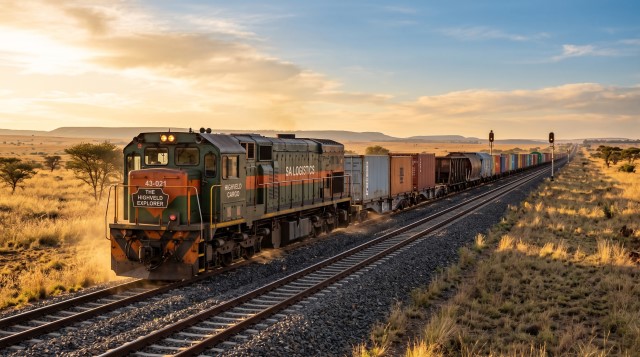
South Africa's private rail freight operators are turning to second-hand Indian locomotives, leased Traxtion units and Chinese new-builds to bridge a 2026-2027 capacity gap, with US-sourced locomotive procurement now seen as too slow to meet the first private train deadlines on Transnet's network.
RAILWAY
29 April 2026 • 5 min read
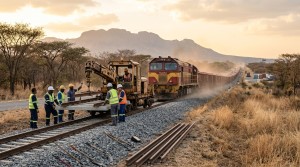
With the first private freight trains expected on Transnet's network in the second half of 2026, the 11 train operating companies cleared by the Rail Infrastructure Manager are racing to secure rolling stock — and the answer for most is not new American locomotives, but a mix of Indian regauge units, local leases and Chinese new-builds.
When the South African government conditionally allocated 24 million tonnes a year of train slots to 11 private operators in 2025, the assumption was that the constraint would be track access and signalling. A year later, the constraint has shifted: it is locomotives. Industry conversations indicate that ordering new units from US OEMs typically takes about three years from purchase order to first delivery — far too long for operators contracted to start hauling coal, iron ore and containers in the second half of 2026.
That timeline pressure has reshaped the rolling stock playbook. Operators are pursuing second-hand locomotives from Indian Railways via RITES — locos being released as the Indian network electrifies long-distance lines — and regauging them from Indian broad gauge to South Africa's 1,067 mm Cape gauge. Others are leasing existing units from Traxtion, with Transnet's LeaseCo business reportedly readying a parallel offer. A third group is going to Chinese OEMs, where lead times are shorter and financing is increasingly available alongside the export contract.
SA private rail capacity outlook: 11 private train operating companies awarded conditional access; 24 million tonnes per year of slots allocated; first private trains expected H2 2026; full ramp 2027-2028; government targets 250 million tonnes a year on the freight network by 2029. (Source: Railway Gazette / Department of Transport, April 2026)
India offers a structural opportunity. Indian Railways is replacing diesel traction with electric units across long-distance corridors, releasing diesel-electric locos with significant remaining service life. Many of these units can be acquired at a steep discount to new-build cost and shipped to South Africa for regauging at workshops with capacity already used to handle Cape-gauge work. The economics of this trade favour smaller and mid-tier operators that need 5-15 locos rather than 50-100.
Chinese OEMs offer a different proposition: shorter lead times, integrated financing and modern traction packages designed for heavy-haul operations. The trade-off is local content rules, after-sales support depth and the longer-term spare-parts question. Several operators are running parallel options — leasing a small starter fleet from Traxtion or LeaseCo to begin contracts on schedule, while placing a larger Chinese order for delivery in 2027-2028.
The 250 million tonne 2029 target is not a South Africa-only number. A significant share of the additional volume will flow through cross-border interchange points at Beitbridge, Mafikeng-Lobatse, and into the Maputo and Walvis Bay corridors. SADC freight operators with long-term contracts indexed to road freight should now plan for a meaningful share of bulk traffic — coal, ore, grain, containers — to migrate to rail as private operators ramp up.
For freight forwarders and 3PLs, the immediate question is which corridor pairs will see private rail capacity first. Coal lines into Richards Bay, the iron ore line to Saldanha, and the container corridor between Gauteng and Durban are all in the early-allocation envelope. Operators planning bulk and intermodal contracts in 2027 should be modelling rail-to-port options now, ahead of the price arbitrage that will open as private rail fills the road-rail gap.
Rail liberalisation is finally moving from policy to traction packs. SADC road operators should not assume the H2 2026 first private trains are a symbolic milestone. The locos are being sourced now, and bulk and container customers will be offered modal alternatives faster than most road plans assume. Operators with diversified road and rail capability will outperform pure-road competitors on long-haul corridors.
Stay connected with Southern Africa's freight and transport community.
Join 6,400+ logistics professionals across the SADC region.
Visit Laaimylorrie.com| About the Author | |

|
Andre Klynsmith Entrepreneur & Technology Enthusiast Andre's expertise spans technology, blockchain, transport, and logistics -- with a passion for innovation and driving positive change across industries. |
| Source: Railway Gazette International View source › | 29 April 2026 |


Subscribe to our Newsletter and stay in the know with all the latest Industry News, Products and Trends covering the whole of the SADC region.
KS Blockchain T/A Laaimylorrie.com . All Rights Reserved.