Industry related headlines to keep you in the know.
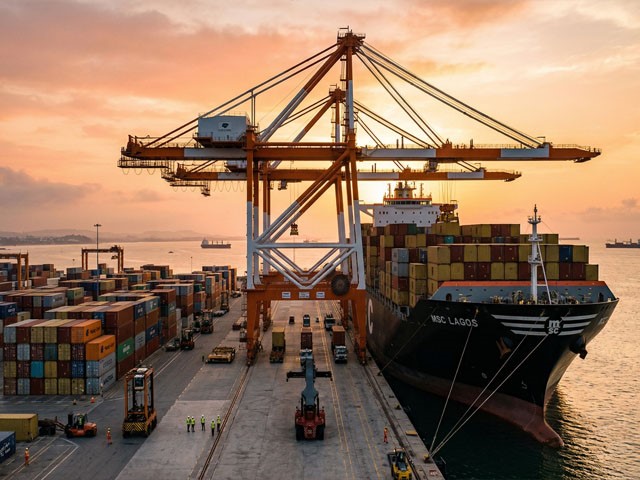
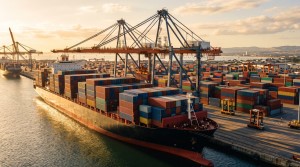
Angola's Port of Luanda is undergoing its most significant transformation in decades, with AD Ports Group's Noatum Terminal set to raise container capacity from 25,000 TEUs to 350,000 TEUs annually by the third quarter of 2026 — a move that will fundamentally alter freight routes across Southern and Central Africa.
Shipping and Logistics
26 March 2026 • 4 min read
Angola's Port of Luanda handles 76% of the country's container and general cargo volumes and serves as the primary maritime gateway for landlocked Zambia and the DRC. A $380 million upgrade backed by Abu Dhabi's AD Ports Group is now turning it into one of Central and West Africa's most competitive deepwater terminals — and SADC freight operators need to understand what this means for western corridor routing.
AD Ports Group formally launched Noatum Ports Luanda Terminal operations in January 2025 under a 20-year concession signed with Angolan partners Unicargas and Multiparques in April 2024. The group has committed approximately USD 250 million through 2026 for phase one, with a total project cost of around USD 380 million. By Q3 2026, new container handling equipment will be fully installed and commissioned, vaulting annual container throughput capacity from a modest 25,000 TEUs to 350,000 TEUs — a fourteen-fold increase.
Beyond containers, the terminal's Ro-Ro capacity will exceed 40,000 vehicles per year, reflecting Angola's growing vehicle import demand driven by infrastructure development and a recovering middle class. The terminal area of 192,000 square metres is being entirely re-engineered for high-density operations, with state-of-the-art IT systems capable of integrating with regional customs and logistics platforms.
Depth advantage: At 16 metres alongside, Noatum Ports Luanda Terminal will be the only berth in the Port of Luanda capable of handling Super Post Panamax vessels of up to 14,000 TEUs. (Source: AD Ports Group, 2025)
Luanda's strategic importance extends well beyond Angola's own trade. The port serves as the primary maritime access point for two of Southern Africa's most resource-rich landlocked countries — the Democratic Republic of the Congo and Zambia. Both nations are undergoing commodity export booms, with Zambia targeting one million tonnes of copper in 2026 and the DRC expanding cobalt and coltan extraction. For these countries, Atlantic-facing Luanda offers a shorter westward routing alternative to the longer haul across land to Durban, Dar es Salaam or Beira.
AD Ports' integrated logistics arm, Noatum Unicargas Logistics, is specifically designed to provide end-to-end freight forwarding, transport and customs services connecting the terminal to the Angolan interior and onward to DRC and Zambia. As the Lobito Atlantic Railway rehabilitation progresses along the Benguela Corridor, shippers will increasingly have a credible west-coast alternative for bulk mineral exports that previously had no choice but to move overland via South Africa.
The Luanda upgrade arrives as South Africa's Durban, Walvis Bay in Namibia and Dar es Salaam in Tanzania are all investing heavily in throughput capacity. The SADC port landscape is becoming more competitive than at any point in the region's history. For cargo destined to or from the DRC's western provinces, Luanda now offers a credible cost and time advantage over routing through Durban or Dar es Salaam, particularly if the Benguela Corridor rail link performs as planned.
For Walvis Bay — which handles a meaningful share of SADC's western corridor freight — the Luanda development will create a new competitive dynamic. Namibia's port remains advantaged by its efficiency and the Trans-Cunene Corridor link into Angola's south, but Luanda now directly competes for DRC and Zambia cargo volumes at scale. Freight forwarders and beneficial cargo owners should be modelling these routing options now, before the new equipment goes live in Q3 2026.
When the Noatum Luanda Terminal reaches full capacity in Q3 2026, freight forwarders routing cargo to and from the DRC and Zambia will have a genuinely competitive Atlantic-facing option for the first time. Operators should review their western corridor routing assumptions now — the cost and transit time calculations for DRC and Zambia cargo are about to change materially, and those who prepare early will win the contracts.
Stay connected with Southern Africa's freight and transport community.
Join 6,400+ logistics professionals across the SADC region.
Visit Laaimylorrie.com| About the Author | |

|
Andre Klynsmith Entrepreneur & Technology Enthusiast Andre's expertise spans technology, blockchain, transport, and logistics — with a passion for innovation and driving positive change across industries. |
| Source: AD Ports Group / GCC Business Watch View source › | 26 March 2026 |


Subscribe to our Newsletter and stay in the know with all the latest Industry News, Products and Trends covering the whole of the SADC region.
KS Blockchain T/A Laaimylorrie.com . All Rights Reserved.