Industry related headlines to keep you in the know.
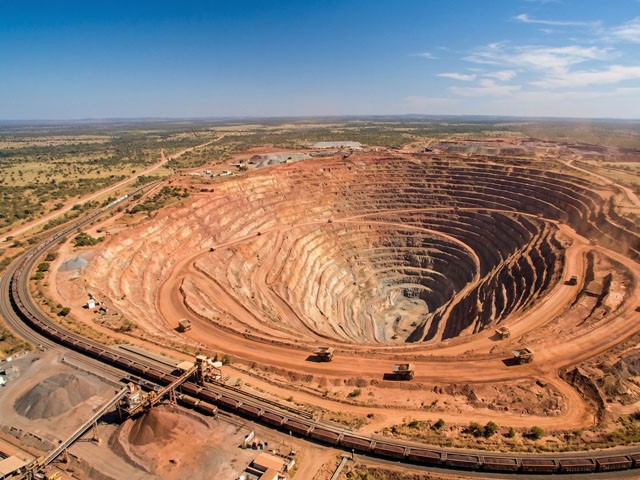
Southern Africa sits on some of the world's largest deposits of copper, cobalt, lithium, manganese and platinum-group metals — the critical minerals that underpin the global energy transition. But the World Economic Forum warns that without deliberate, coordinated logistics strategies across the entire mining value chain, the region risks watching its mineral wealth benefit others more than itself.
Mining and Commodities
24 March 2026 • 4 min read
SADC's critical mineral wealth can only be fully commercialised through coordinated action across the entire value chain: exploration, extraction, processing, logistics, and end-use manufacturing. The logistics link is the most underdeveloped — and the most urgently required — piece of the puzzle in 2026.
The global energy transition is creating unprecedented demand for critical minerals. By 2040, demand for copper is expected to nearly double, while demand for cobalt, lithium and nickel — all produced in significant quantities across SADC — is projected to grow four to six times current levels. The DRC alone holds an estimated 50–70% of the world's known cobalt reserves. Zambia is targeting one million tonnes of annual copper production. Zimbabwe holds substantial lithium and platinum-group metal deposits. South Africa is the world's leading producer of platinum, palladium and chrome.
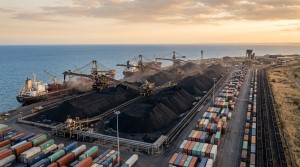
The scale of the opportunity is matched by the scale of the logistics challenge. Most SADC mineral production currently leaves the region in raw or minimally processed form, exported by road or rail to coastal ports and shipped to processing facilities in China, Europe or North America. This export structure captures a fraction of the available value — and places enormous strain on logistics infrastructure that was never designed to handle the volumes now being contemplated. The February 2026 Critical Minerals Ministerial hosted by the US State Department underlined global demand for SADC supply chain development, with multilateral financing commitments specifically targeting infrastructure gaps in the Lobito, Nacala and Walvis Bay corridors.
Value Chain Gap: SADC critical mineral deposits are valued in the trillions of US dollars at current commodity prices, yet the region currently captures only a fraction of the value due to limited in-region processing and logistics bottlenecks that inflate the cost of getting raw materials to market. (Source: World Economic Forum, December 2025)
One of the most significant structural risks for SADC mineral logistics is the mismatch between mining project development timelines and the pace of technology-driven demand cycles. A greenfield copper mine typically takes eight to twelve years from initial resource discovery to first commercial production. A new battery chemistry or EV platform can move from concept to mass-market in three to four years. This creates a structural supply gap — periods when mining output cannot meet near-term battery and EV industry demand — that requires far stronger coordination between upstream mineral producers, infrastructure financiers and downstream manufacturers than SADC currently has in place.
The DRC's experience with cobalt export restrictions in 2025 — implemented to manage a short-term oversupply — illustrates the double-edged nature of this relationship. CMOC, which maintained its cobalt production targets and secured export quotas through proactive engagement with the Congolese government, was able to provide supply chain certainty to its downstream customers while competitors faced disruption. For logistics operators serving the mineral sector, supply chain certainty is increasingly the product they are being asked to deliver — not just physical transport.
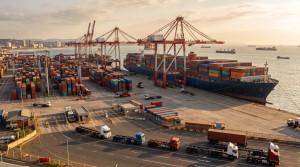
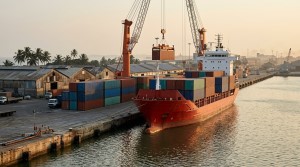
The WEF's December 2025 analysis of SADC critical mineral strategies identifies four logistics-specific requirements that must be addressed in parallel with mine development. First, corridor infrastructure — rail and road — must be upgraded to handle the volume and weight of bulk mineral exports without creating the chronic congestion that has undermined the Copperbelt's competitiveness for decades. Second, port handling capacity at Durban, Walvis Bay, Beira, Nacala and Lobito must be expanded and modernised to handle projected mineral export volumes through 2035 and beyond. Third, digital supply chain oversight — including blockchain-based mineral traceability, certified sustainable sourcing documentation, and carbon footprint reporting — is becoming a mandatory requirement for accessing premium markets in the EU and North America. Fourth, beneficiation logistics — the infrastructure needed to support in-region processing of minerals before export — requires dedicated industrial zone development adjacent to existing corridors.
South Africa's established industrial base positions it as a natural processing hub for SADC mineral beneficiation — but only if the rail and road corridors connecting Zambia, Zimbabwe, the DRC and Botswana's mineral heartlands to South African smelters and refineries are reliable and cost-competitive. The current state of these corridors makes that a significant operational risk that investors are factoring into project feasibility analyses.
Freight operators with capability on the Copperbelt, Lobito, Nacala and North-South corridors are positioned at the heart of SADC's most significant logistics growth opportunity. Operators who invest in digital traceability systems, certified sustainable transport documentation, and bulk mineral handling capability now will be first in line for the long-term contracts that mining houses and global buyers are structuring for the decade ahead. The critical minerals boom is not a future event — it is happening now, and the logistics infrastructure race has already started.
Stay connected with Southern Africa's freight and transport community.
Join 6,400+ logistics professionals across the SADC region.
Visit Laaimylorrie.com| About the Author | |

|
Andre Klynsmith Entrepreneur & Technology Enthusiast Andre's expertise spans technology, blockchain, transport, and logistics -- with a passion for innovation and driving positive change across industries. |
| Source: World Economic Forum / US State Department Critical Minerals Ministerial View source › | 24 March 2026 |


Subscribe to our Newsletter and stay in the know with all the latest Industry News, Products and Trends covering the whole of the SADC region.
KS Blockchain T/A Laaimylorrie.com . All Rights Reserved.