Industry related headlines to keep you in the know.
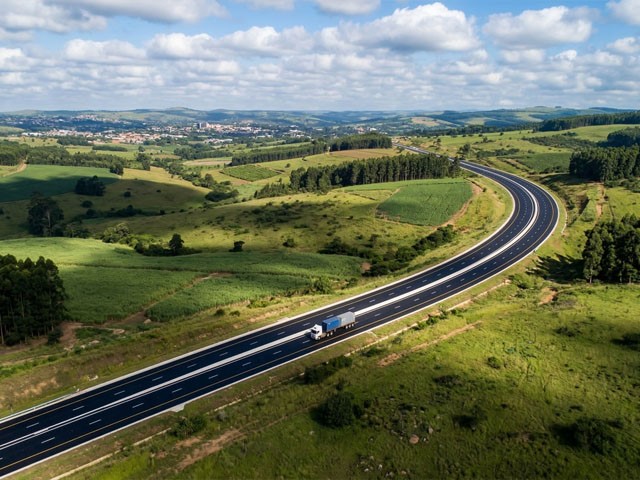
South Africa's 2026 national budget commits over R1 trillion in public-sector infrastructure spending over the medium term, with transport and logistics identified as the single largest component. Finance Minister Enoch Godongwana's budget speech places rail recovery, road maintenance, and port capacity at the centre of the government's economic recovery strategy — a clear signal that Pretoria views logistics infrastructure as the foundation for reversing years of decline.
Economy and Markets
13 March 2026 • 4 min read
R577 billion for state-owned companies, R1 trillion total over the medium term, and transport identified as the top infrastructure priority. South Africa is betting big on logistics to drive economic recovery — the question is whether execution can match ambition.
Of the R1 trillion infrastructure commitment, R577.4 billion will be spent by state-owned companies and public entities — with Transnet and the South African National Roads Agency Limited (SANRAL) as the primary beneficiaries. SANRAL will maintain its resilience programme, with annual maintenance planned for approximately 27,000 kilometres of roads and resurfacing of 2,000 kilometres. An additional R1.5 billion has been injected into provincial road grants for 2026/27 to cover disaster-related repair costs.
On the rail side, the budget supports Transnet's liberalisation programme, including the entry of private train operators onto the freight network and three major public-private partnership concessions expected to go to market in 2026. The Passenger Rail Agency of South Africa has been allocated R5.8 billion for its rolling stock fleet renewal programme, with a target of increasing annual passenger trips from 77 million to between 250 and 450 million over the medium term.
Budget allocation: Over R1 trillion in public infrastructure spending over the medium term, with R577.4 billion through state-owned companies. (Source: National Treasury, Budget 2026)
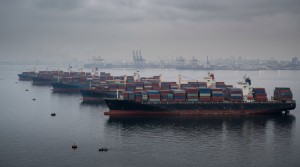
The prioritisation of transport infrastructure is not ideological — it is a response to measurable economic damage. South Africa's logistics costs as a percentage of GDP remain among the highest in the world, driven by rail underperformance that has forced bulk commodities onto roads, port congestion that adds days to container dwell times, and a road maintenance backlog valued at R200 billion. These inefficiencies directly erode the competitiveness of South African exporters and raise the cost of imports across the SADC region.
The budget also signals a shift in approach: rather than relying solely on public funding, the government is actively structuring concessions and partnerships to attract private capital. The Richards Bay Dry Bulk Terminal, the Ngqura manganese corridor, and the entry of 11 private rail operators are all designed to leverage private efficiency and investment alongside public infrastructure.
South Africa has a history of ambitious infrastructure plans that falter in execution. Budget allocations do not guarantee spending, and spending does not guarantee outcomes. Transnet's turnaround plan, while showing early progress, must overcome decades of underinvestment, skills shortages, and institutional capacity gaps. SANRAL's road maintenance programme is fighting a backlog that grows faster than repairs can be completed.
For the freight sector, the credibility of these commitments will be tested not by the numbers in the budget speech, but by whether the first private trains are running by late 2026, whether the Richards Bay terminal reaches its expanded capacity target, and whether SANRAL's 2,000 kilometres of resurfacing actually gets done. The logistics industry has heard the promises before — what it needs now is delivery.
The R1 trillion infrastructure commitment creates medium-term opportunities for freight operators across the SADC region — from construction logistics and materials transport to increased throughput at expanded ports and rail terminals. Operators should track the Transnet concession timelines and SANRAL's road maintenance schedule to anticipate where new capacity will come online. If even half of the planned investment is delivered on schedule, the freight landscape in Southern Africa will look meaningfully different by 2028.
Stay connected with Southern Africa's freight and transport community.
Join 6,400+ logistics professionals across the SADC region.
Visit Laaimylorrie.com| About the Author | |

|
Andre Klynsmith Entrepreneur & Technology Enthusiast Andre's expertise spans technology, blockchain, transport, and logistics — with a passion for innovation and driving positive change across industries. |
| Source: Railways Africa / Ecofin Agency View source › | 13 March 2026 |


Subscribe to our Newsletter and stay in the know with all the latest Industry News, Products and Trends covering the whole of the SADC region.
KS Blockchain T/A Laaimylorrie.com . All Rights Reserved.