Industry related headlines to keep you in the know.

The fundamentals of running a freight and logistics business in Southern Africa are being rewritten. Five structural shifts — driven by technology, regulation, sustainability pressure, and changing trade patterns — are converging in 2026, and operators who understand them early will be better positioned to compete.
Business Insights
12 March 2026 • 5 min read
Africa's logistics sector is not facing one big disruption — it's facing five simultaneous shifts that are redefining competitive advantage. For SADC freight operators, 2026 is the year to move from reactive adaptation to deliberate strategy.
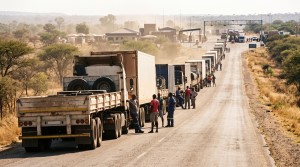
A few years ago, having a digital load-matching platform or a real-time tracking system was a competitive edge. In 2026, it is rapidly becoming the baseline expectation. Digitized customs processes have been shown to improve clearance times by 30–50%, and as more SADC border posts implement electronic systems, operators who still rely on paper-based documentation will face avoidable delays. The question is no longer whether to digitalise, but which systems to prioritise and how to integrate them with existing operations.
Cloud-based transport management systems, digital freight marketplaces, and mobile-enabled load boards are giving smaller operators access to tools that were previously only affordable for large fleets. The entry barrier for technology is falling, but the operators who gain the most will be those who pair digital tools with disciplined data practices — tracking route profitability, driver performance, and fuel consumption in ways that drive measurable decisions rather than just dashboards.
Efficiency impact: Digitized customs and documentation processes have been shown to reduce border clearance times by 30–50%, cutting dwell time costs for cross-border freight operators. (Source: Freight News, 2026)
The African Continental Free Trade Area is no longer a policy discussion — it is operational, and its tariff phase-downs are being applied in participating countries right now. South Africa's SARS published the AfCFTA phase-down schedule in October 2025, effective from January 2026. For freight forwarders, customs brokers, and transport operators, this means an expanding set of origin requirements and duty classifications that need to be understood to take advantage of preferential rates — or to avoid customs disputes.
SADC operators who carry goods across multiple countries are in a strong position to benefit from AfCFTA's expanding framework, provided they have staff who understand rules of origin, certificate of origin procedures, and the commodities where full tariff relief has already been agreed. With intra-African trade potentially rising by over 50% under full AfCFTA implementation, the operators who invest in compliance expertise now will find it easier to grow their cross-border business as the agreement matures.
Large shippers — particularly retailers, FMCG companies, and mining houses with international investors — are increasingly asking logistics providers to report on carbon emissions. In South Africa, companies like Woolworths are already piloting electric delivery vehicles; and in the mining sector, scope 3 emission reporting now includes contracted transport. For the average SADC road freight operator, this trend is not yet a daily commercial pressure, but it is moving closer to becoming one.
Operators who begin tracking their fleet fuel consumption and CO₂ output now — even using basic spreadsheet-level systems — will be better equipped when clients start asking for emissions data as part of their procurement processes. The shift from sustainability as a marketing story to sustainability as a tendering requirement is already underway in South Africa and will spread across the SADC region as global supply chain standards tighten. Operators serving export-oriented clients should treat this as a near-term commercial risk to manage, not a long-term trend to watch from a distance.
The five shifts — digital adoption, AfCFTA compliance, sustainability reporting, corridor-based routing, and supply chain resilience — are each addressable with targeted operational changes. The operators who treat 2026 as a planning year rather than a reactive year will outcompete those who wait for each shift to become a crisis before responding. Practical first steps include: auditing your documentation processes for digital gaps, reviewing your client contracts for emission reporting clauses, and mapping your routes against current corridor infrastructure to understand where your dependencies lie.
Stay connected with Southern Africa's freight and transport community.
Join 6,400+ logistics professionals across the SADC region.
Visit Laaimylorrie.com| About the Author | |

|
Andre Klynsmith Entrepreneur & Technology Enthusiast Andre's expertise spans technology, blockchain, transport, and logistics — with a passion for innovation and driving positive change across industries. |
| Source: Freight News / Globalia Logistics Network View source › | 12 March 2026 |


Subscribe to our Newsletter and stay in the know with all the latest Industry News, Products and Trends covering the whole of the SADC region.
KS Blockchain T/A Laaimylorrie.com . All Rights Reserved.