Industry related headlines to keep you in the know.
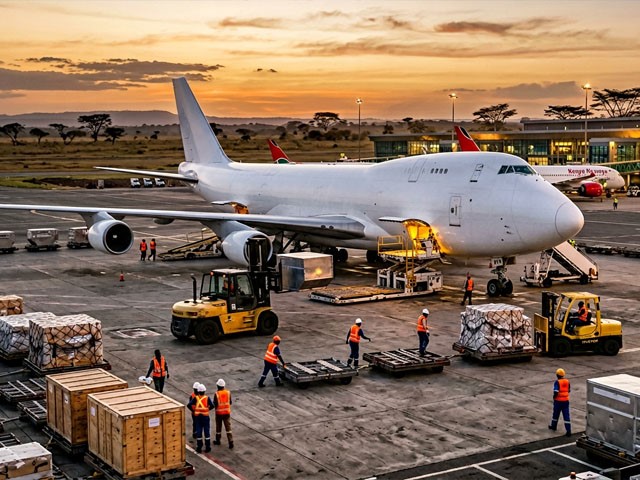
Africa's aviation sector has emerged as the world's fastest-growing air travel market, posting a 17.9% rise in passenger demand in January 2026 — and the capacity uplift is creating new opportunities for air freight operators serving SADC routes.
Aviation
12 March 2026 • 4 min read
Africa outpaced every other region in global passenger traffic growth at the start of 2026. For logistics operators across the SADC, this is not just a travel story — it is a signal that belly cargo capacity is expanding, costs are shifting, and air freight is becoming a more viable option for time-sensitive freight.
IATA data for January 2026 shows Africa recording a 17.9% increase in passenger demand — the highest of any region globally. African airlines simultaneously posted a 16.3% rise in capacity with a 77% load factor, signalling strong aircraft utilisation across the continent. Ethiopian Airlines, Kenya Airways, and South African Airways led much of this growth, opening or restoring routes to Asia, Europe, and the Middle East.
For freight purposes, passenger growth matters directly: most air cargo on African routes moves as belly freight aboard passenger aircraft. As capacity increases and load factors stabilise, more belly space becomes available for time-critical shipments — and rates tend to adjust accordingly. The South African air freight market is valued at USD 1.11 billion in 2026 and is forecast to grow at a CAGR of 2.45% to reach USD 1.25 billion by 2031, with Cape Town's cargo terminal recording an 89.92% on-time departure rate.
Market Size: South Africa's air freight market is worth USD 1.11 billion in 2026, growing to an estimated USD 1.25 billion by 2031 — driven by pharmaceuticals, perishables, and high-value e-commerce goods. (Source: Mordor Intelligence, 2026)
Perishables — fresh produce, flowers, and seafood — have traditionally dominated African air cargo flows. That profile is changing. Growth in 2025 and into 2026 has been increasingly driven by pharmaceuticals, medical devices, and higher-value consumer goods as e-commerce penetration deepens across Southern Africa. The Western Cape is the fastest-growing sub-market, with cargo volumes rising 27% in the first ten months of 2024. Cape Winelands Airport, currently under development, will add an estimated 80,000 tonnes of annual air cargo capacity once operational.
Despite this momentum, Africa still holds only around 2% of global cargo tonne-kilometres, pointing to significant headroom. Capacity constraints from freighter supply shortages and geopolitical disruptions — Africa is down approximately 19% on widebody freighter capacity globally in 2026 — mean operators must plan ahead. Booking windows are tightening and early confirmation is increasingly critical on high-demand routes.
The Single African Air Transport Market (SAATM) remains the continent's most ambitious aviation liberalisation initiative. IATA estimates SAATM could create 155,000 jobs and contribute USD 1.3 billion to African GDP by improving route connectivity and enabling seamless multi-country itineraries. For SADC, this matters: better intra-continental connectivity directly supports time-critical regional supply chains — particularly for healthcare, food retail, and spare parts logistics.
South African Airways' new domestic codeshare partnership with CemAir, announced in early 2026, demonstrates how airlines are building connectivity domestically while larger liberalisation negotiations continue at the regional level. For freight forwarders operating across SADC, the practical implication is to assess which routes now offer viable air freight options that were not commercially feasible 12 months ago.
Growing passenger capacity means more belly cargo space and improving air freight economics on key SADC routes. Freight forwarders and shippers handling pharmaceuticals, perishables, or high-value e-commerce goods should review their air freight options in 2026 — both on Southern African domestic routes and on SADC regional corridors where capacity is increasing.
Stay connected with Southern Africa's freight and transport community.
Join 6,400+ logistics professionals across the SADC region.
Visit Laaimylorrie.com| About the Author | |

|
Andre Klynsmith Entrepreneur & Technology Enthusiast Andre's expertise spans technology, blockchain, transport, and logistics -- with a passion for innovation and driving positive change across industries. |
| Source: Travel and Tour World / Mordor Intelligence View source › | March 2026 |


Subscribe to our Newsletter and stay in the know with all the latest Industry News, Products and Trends covering the whole of the SADC region.
KS Blockchain T/A Laaimylorrie.com . All Rights Reserved.