Industry related headlines to keep you in the know.
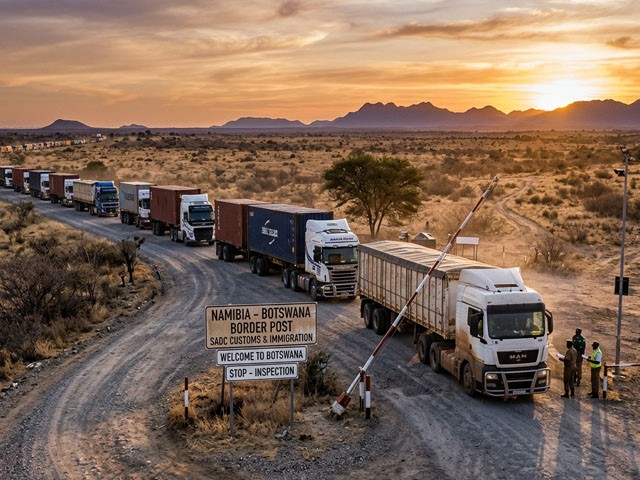
The Southern African Development Community (SADC) has approved revised regional guidelines aimed at harmonising cross-border road transport operations across member states. For freight operators running trucks between Namibia, South Africa, Botswana, Zambia, Zimbabwe, and neighbouring SADC countries, these guidelines affect how permits are structured, how corridor trips are monitored, and what compliance documentation is required at points of entry.
Transportation
11 March 2026 • 4 min read
Cross-border delays add days to transit times and significant cost to cargo owners across SADC. The revised guidelines target the administrative friction at the root of those delays — permits, corridor monitoring, and points-of-entry management — with harmonisation across all 16 member states.
The revised guidelines on cross-border transport harmonisation target three core areas:
The goal is to reduce the administrative and compliance burden that slows freight movement at borders — a persistent challenge across SADC trade corridors where delays add days to transit times and significant cost to cargo owners.
In South Africa, the Cross-Border Road Transport Agency (C-BRTA) remains the key regulatory body for operators carrying goods across international borders. The C-BRTA issues permits for various categories of cross-border transport — goods permits for freight operators, bus passenger permits, taxi passenger permits, and specialist tourist transport permits.
Under the revised SADC framework, the intent is that permit systems across member states become more compatible, reducing the duplication of documentation that operators currently face when crossing multiple borders on a single corridor run. An operator moving cargo from Walvis Bay through Namibia, Botswana, and into Zimbabwe currently deals with different permit formats at each crossing — a process the harmonisation programme aims to simplify.
16 member states, one framework: SADC's cross-border transport harmonisation programme covers all member states including South Africa, Namibia, Botswana, Zimbabwe, Zambia, Mozambique, Tanzania, and the DRC — aiming to standardise permits, monitoring, and border procedures across the entire regional network. (Source: SADC / C-BRTA)
One of the most significant operational elements of the revised guidelines is the SMART corridor monitoring system. This digital infrastructure records and monitors cross-border trips in real time, including driver wellness checks — a response to the high rate of fatigue-related incidents on long SADC corridor routes.
For operators, this means increased digital accountability for trip management. Vehicles and drivers registered in the system are tracked from departure through key waypoints and border crossings, with the data feeding into statistical reporting used by SADC transport authorities to identify bottlenecks and compliance gaps.
Cross-border compliance is one of the highest-friction elements of SADC freight operations. Operators running international routes should review their current permit coverage against the revised SADC framework, ensure drivers are briefed on corridor monitoring requirements, and consider how telematics systems can support the digital documentation trail that SMART corridor monitoring increasingly requires. Staying ahead of compliance changes reduces the risk of border delays, fines, and vehicle detention — all of which erode profitability on routes where margins are already tight.
Stay connected with Southern Africa's freight and transport community.
Join 6,400+ logistics professionals across the SADC region.
Visit Laaimylorrie.comAndre Klynsmith is a dynamic entrepreneur and technology enthusiast, with a fervent passion for innovation and its potential to revolutionize industries.
His expertise lies in the realms of technology, blockchain, transport, and logistics, where he consistently demonstrates his visionary thinking and dedication to driving positive change.

|
Written by Andre Klynsmith Contact me at info@laaimylorrie.com Visit me at Laaimylorrie.com |
| Source: Cross-Border Road Transport Agency (C-BRTA) - Click Here >>> | 11 March 2026 |


Subscribe to our Newsletter and stay in the know with all the latest Industry News, Products and Trends covering the whole of the SADC region.
KS Blockchain T/A Laaimylorrie.com . All Rights Reserved.