Industry related headlines to keep you in the know.
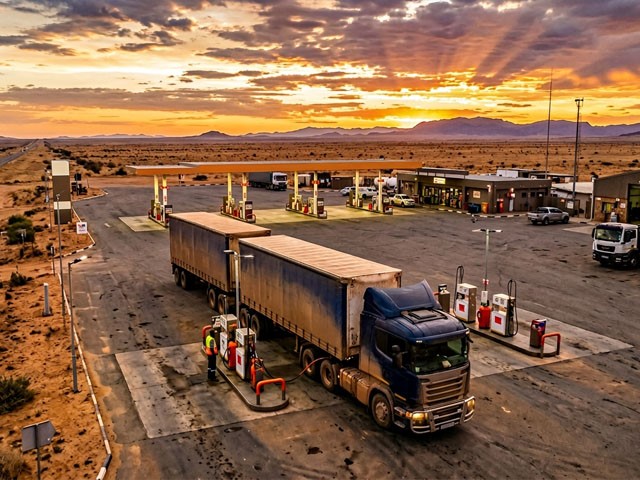
South Africa's diesel price increased by up to 65 cents per litre at the start of March 2026, pushing 0.005% sulphur diesel to R18.60 per litre inland. For freight operators running routes across the SADC region, the timing is unwelcome — and the pressure on operating margins is real.
Economy and Markets
11 March 2026 • 4 min read
A 65-cent-per-litre diesel increase translates to roughly R22,750 in additional annual fuel spend per truck. For a fleet of 20 vehicles running SADC corridors, that is R455,000 in new costs — before a single breakdown or rate renegotiation.
From 4 March 2026, South Africa adjusted its pump prices upward across the board. The key diesel figures are: 0.05% sulphur diesel (inland) up 62 cents to R18.53 per litre, and 0.005% sulphur diesel (inland) up 65 cents to R18.60 per litre. Petrol also increased by approximately 20 cents per litre.
The Road Freight Association (RFA) had already warned operators to brace for higher costs at the pump, noting that the increases would ripple through supply chains almost immediately.
Cost impact per truck: A vehicle covering 100,000 km per year at 35 litres per 100 km sees approximately R22,750 in additional annual fuel spend from the 65c/litre increase alone. (Based on Central Energy Fund pricing data, March 2026)
International oil prices came under upward pressure in late February 2026 following renewed geopolitical tensions in the Middle East. When global oil supply faces perceived risk, Brent crude prices climb — and South Africa, as a fuel-importing country, absorbs that cost directly at the pump.
The rand-dollar exchange rate amplifies the effect. Any weakening of the rand against the dollar makes imported oil more expensive in local currency terms, turning a moderate global price movement into a significant domestic cost increase for transporters.
Namibia and Botswana typically adjust their own fuel prices in line with South African movements, meaning operators running Trans-Kalahari, Trans-Caprivi, and cross-border routes into Zambia, Zimbabwe, and beyond will face similar increases along their corridors. For Namibia-based operators — where diesel prices are linked to Walvis Bay import costs — the March adjustment is expected to follow the same trajectory.
Transporters who locked in freight rates before the increase now face a margin squeeze unless fuel escalation clauses are built into their contracts. Those without them may need to renegotiate — or absorb the loss until agreements are renewed.
Now is a good time to review your freight rate structures and confirm whether fuel escalation clauses are included in your agreements. Operators using fleet management software can use trip and fuel consumption data to identify routes where efficiency improvements could offset some of the cost increase. If you are not yet tracking fuel use per trip, this increase is a strong reason to start.
Stay connected with Southern Africa's freight and transport community.
Join 6,400+ logistics professionals across the SADC region.
Visit Laaimylorrie.comAndre Klynsmith is a dynamic entrepreneur and technology enthusiast, with a fervent passion for innovation and its potential to revolutionize industries.
His expertise lies in the realms of technology, blockchain, transport, and logistics, where he consistently demonstrates his visionary thinking and dedication to driving positive change.

|
Written by Andre Klynsmith Contact me at info@laaimylorrie.com Visit me at Laaimylorrie.com |
| Source: AA South Africa — Fuel Price Update - Click Here >>> | 11 March 2026 |


Subscribe to our Newsletter and stay in the know with all the latest Industry News, Products and Trends covering the whole of the SADC region.
KS Blockchain T/A Laaimylorrie.com . All Rights Reserved.