Industry related headlines to keep you in the know.
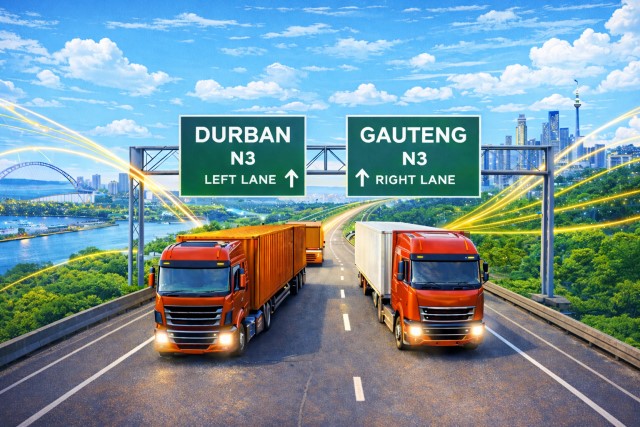
The Port of Gauteng has kicked off Transport Month with the release of a detailed White Paper outlining a R50bn development plan aimed at creating 50,000 permanent employment opportunities and significantly improving road safety. Positioned as a premier inland trade gateway, the project is set to transform Africa’s freight transport landscape by addressing long-standing inefficiencies within South Africa’s logistics system.
South Africa’s economy is shifting towards a higher-volume, lower-margin model, driven in part by the entry of global e-commerce players such as Shein, Temu, and Amazon. This growth in volume is not limited to consumer goods, as imported vehicle volumes are also increasing rapidly. As these companies scale, they are expected to transition from air freight to container shipping, placing additional strain on the already congested Durban–Gauteng freight corridor.
Francois Nortjé, developer of Port of Gauteng, outlines the project’s transformative vision:
“We’re creating Africa’s most advanced inland trade gateway. This facility represents our commitment to solving South Africa’s freight crisis while generating massive economic returns. The 50,000 permanent jobs are just the beginning; we’re creating a platform for decades of sustainable growth.”
Nortjé adds that the White Paper was developed in response to South Africa’s escalating freight transport challenges.
“Since the 2013 National Development Plan set ambitious 2030 targets for shifting freight from road to rail, little progress has been made. With only four years remaining, decisive action is now urgent. As road congestion worsens and rail volumes decline, this White Paper presents a practical solution — leveraging the Port of Gauteng’s R50bn inland port to restore balance, reduce costs, and unlock long-term economic growth.”
Strategically located at the junction of the Container Rail Corridor and the N3, N12, and N17 highways, the Port of Gauteng represents one of South Africa’s largest private-sector infrastructure initiatives.
The development will feature two 2.2km flat rail alignments designed for high-efficiency container handling. Sustainability has been built into the design through integrated solar power, rainwater harvesting, and advanced recycling systems.
Planned facilities include a world-class car terminal and a container rail terminal, enabling rapid, high-volume throughput and seamless train-to-truck transfers.
This project directly addresses the growing crisis on the Durban–Gauteng freight corridor, where rail currently carries less than 14% of total freight volumes — well below the National Development Plan’s target of 50%.
The National Development Plan (NDP) 2030 prioritises the Durban–Gauteng freight corridor, calling for improved capacity, efficiency, and sustainability. However, with only four years remaining until 2030, high transport costs and inadequate freight infrastructure continue to prevent South Africa from achieving its goals.
To meet these targets, South Africa urgently requires:
The White Paper highlights the severity of the situation, noting that Transnet recorded annual losses of approximately R1bn on the corridor between 2014 and 2019. These losses increased to around R3bn per year during the Covid-19 period. As a result, rail volumes declined dramatically from approximately 80 trains per day to just 15 by 2023–2024.
Mike Daniel, CEO of RailRunner South Africa, explains the impact:
“Port of Gauteng changes everything. It provides the missing link that makes rail competitive again. With purpose-built rail alignments and future three-hour turnaround times at the container and car terminals, we can finally deliver the reliability that shippers demand.”
An innovative element of the Port of Gauteng development is the integration of Performance-Based Standards (PBS) vehicles. These long truck-and-trailer combinations are capable of carrying two containers and are designed to work in tandem with enhanced rail infrastructure.
The use of PBS vehicles significantly improves capacity and efficiency while reducing emissions. Optimal container pairing and improved vehicle stability contribute to enhanced road safety, with truck volumes on the N3 expected to decrease by approximately one-third.
Dr Paul Nordengen, Director at Heavy Vehicle Transport Technology Africa, highlights the importance of this approach:
“Port of Gauteng’s integration of PBS vehicles represents the most significant advancement in heavy vehicle transport efficiency we’ve seen in decades — reducing truck movements by up to 40% and improving safety outcomes on our most critical trade corridor.”
With container volumes projected to grow from 2.8 million to 11.2 million units annually, the development’s rail-ready infrastructure and PBS integration will play a critical role in enabling sustainable growth.
The PBS pilot project is expected to be extended by a further three years to allow for additional research, after which a decision will be made regarding its permanent adoption into legislation.
Through its integrated approach, the Port of Gauteng positions South Africa to meet its National Development Plan commitments while creating a resilient, efficient, and sustainable logistics ecosystem for the future.
Andre Klynsmith is a dynamic entrepreneur and technology enthusiast, with a fervent passion for innovation and its potential to revolutionize industries.
His expertise lies in the realms of technology, blockchain, transport, and logistics, where he consistently demonstrates his visionary thinking and dedication to driving positive change..

Contact me at info@laaimylorrie.com
Visit me at Laaimylorrie.com
Source: External Source - Click Here >>>
October 1, 2025


Subscribe to our Newsletter and stay in the know with all the latest Industry News, Products and Trends covering the whole of the SADC region.
KS Blockchain T/A Laaimylorrie.com . All Rights Reserved.