The Transformative Power of Artificial Intelligence in Port Operations
Artificial Intelligence (AI) is revolutionizing the world of port operations, providing innovative solutions to automate and optimize various processes.
Pioneering ports are harnessing the power of AI to enhance efficiency, reduce carbon footprint, and improve decision-making capabilities. From automating tug and pilotage operations to optimizing berth management and monitoring port congestion, AI is transforming the way ports function. This article explores the current and future applications of AI in port operations, highlighting the benefits it brings and the challenges to its adoption.
Utilizing AI for Enhanced Efficiency:
AI, powered by machine learning algorithms, enables ports to automate and optimize their operations. By leveraging GPS and AIS data, AI systems can track vessel positions in real time, allocate resources efficiently, and predict job durations based on factors like weather conditions and vessel type. This real-time optimization allows ports to respond promptly to changes in supply chain dynamics, leading to increased operational efficiency. For instance, the Port of Tanjung Priok has already reduced the distance traveled during tug and pilot operations by 20% and significantly decreased waiting times for visiting ships.
Optimizing Berth Management:
Berth allocation presents a complex puzzle for ports, considering factors such as vessel size, tidal restrictions, crane availability, and power requirements. AI, powered by machine learning algorithms, has the potential to optimize berth management by learning from historical data. By analyzing past patterns and current data, AI systems can allocate berths more effectively, ensuring that ships are assigned to the right berth at the right time. As the maritime industry transitions to different fuels and technologies, AI-driven algorithms will play a crucial role in adapting berth management to meet the specific needs of vessels.
Monitoring Port Congestion and Predicting Arrivals:
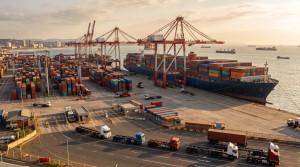
AI can also assist in monitoring and predicting port congestion. By analyzing aerial images, AI algorithms can assess and predict congestion levels, enabling ports to take proactive measures to alleviate congestion before it escalates. Furthermore, AI can improve the accuracy of vessel arrival time predictions, supporting "just in time" initiatives that reduce idling times for visiting vessels. Combining congestion predictions with accurate arrival time estimations allows ports to advise ships to adjust their speed and delay their arrivals, reducing congestion and supporting sustainable shipping practices.
Addressing Emission Reduction and Decarbonization:
As ports strive to reduce emissions and support decarbonization, AI plays a vital role in achieving these goals. By optimizing operations, reducing waiting times, and streamlining processes, AI can help ports minimize energy consumption and reduce their carbon footprint. AI-powered systems enable efficient resource planning, leading to better utilization of equipment, optimized cargo handling, and reduced idle times. With accurate vessel arrival predictions and congestion monitoring, AI can contribute to smarter and more sustainable shipping practices, ultimately supporting the industry-wide efforts towards decarbonization.
Challenges and Future Outlook:
While AI presents immense potential for port operations, challenges remain. Data quality is crucial for the effectiveness of AI algorithms, and ports need to ensure high-quality data inputs to achieve accurate and reliable results. Standardization is another challenge, as the maritime industry lacks uniform standards for technology implementation.
However, numerous ports worldwide are integrating AI into their infrastructure, utilizing predictive models, and creating collaborative ecosystems through Port Community Systems. The future of AI in ports will likely involve a combination of AI systems and human-controlled central systems, optimizing operations and improving efficiency.
Conclusion:
Artificial Intelligence is reshaping the landscape of port operations, offering transformative benefits such as enhanced efficiency, optimized decision-making, and reduced environmental impact. From automating tug and pilotage operations to optimizing berth management and predicting congestion, AI-driven algorithms enable ports to adapt to the evolving demands of the industry. As ports worldwide embrace AI technologies, they are set to revolutionize the way goods move across the globe
Cargo Handling News
Andre Klynsmith is a dynamic entrepreneur and technology enthusiast, with a fervent passion for innovation and its potential to revolutionize industries.
His expertise lies in the realms of technology, blockchain, transport, and logistics, where he consistently demonstrates his visionary thinking and dedication to driving positive change..