Industry related headlines to keep you in the know.
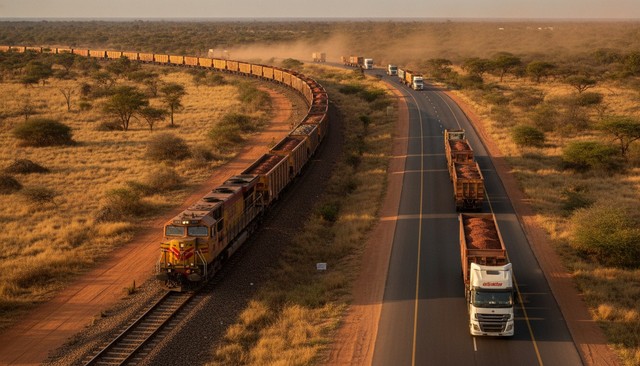
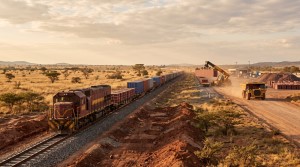
The SADC region collectively operates a railway network of roughly 40 000 kilometres — and yet approximately 69% of South Africa's freight still moves by road. Transport Minister Barbara Creecy put that imbalance at the centre of her keynote to the 2026 Africa Rail Convention, arguing that the shift from road to rail is "not only a transport imperative but also an economic and environmental necessity".
RAILWAY
19 September 2026 • 5 min read
The track already exists. What is missing across most of SADC is condition, capacity and reliable capital — and a new pressure has arrived from an unexpected direction: European carbon accounting now asks bulk exporters to prove how their cargo moved, not just that it arrived.
Creecy's framing matters because it is regional rather than national. Positioned as a single system, SADC's roughly 40 000 kilometres of railway is not a small network by any measure — the constraint has never been route mileage. It is the condition of the track, the availability of rolling stock, the reliability of the schedule and the cost of the capital needed to restore all three.
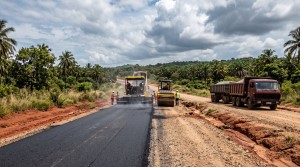
The consequence lands on the road. Speaking earlier this year at the Inaugural National Transport Conference, President Cyril Ramaphosa described "a critical imbalance" in the freight network, noting that the roughly 69% road share "places immense strain on our road network and contributes to poor road safety".
The cost of the gap: Inefficiencies in logistics are estimated to cost the South African economy close to R1 billion a day — a figure Ramaphosa described as a cost the country "should not – and need not – bear". (Source: Inaugural National Transport Conference, 2026)
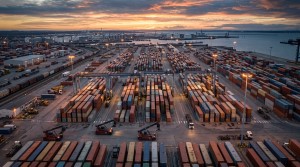
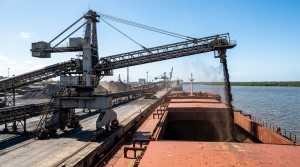
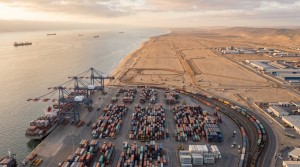
SADC governments are increasingly integrating ports with transport corridors rather than treating the two as separate assets. Rail accounted for 39% of Maputo's mineral cargo movements in 2023. The upgraded Beira–Zambia corridor anchors the North–South Rail Line connecting the region's northern and southern halves. Nacala's coal terminal and planned expansion are built around the Moatize–Nacala railway, while Dar es Salaam continues to improve its rail and inland logistics links, including through the US$1.4-billion TAZARA investment.
On the Atlantic side, Walvis Bay's proposed North Port is designed with high-capacity rail, road, pipeline and conveyor connections into industrial areas and the wider region. In South Africa, the near-term hope rests on the 11 private train operating companies granted access to the network through the Transnet Rail Infrastructure Manager, alongside Transnet's efforts to attract private investment to rehabilitate and operate neglected branch lines.
The European Union's Carbon Border Adjustment Mechanism adds urgency that was not present in earlier rail-reform arguments. Because it places carbon limits on imports of bulk commodities, exporters will increasingly need verifiable data on emissions from production, energy use, cargo handling and transport — the transport leg included.
That turns a haulage decision into a documentation decision. A bulk exporter that can evidence a lower-carbon rail and port leg holds something its competitor cannot manufacture at the last minute. For road operators, the implication is not that the work disappears — it is that the profitable trucking increasingly sits in the first and last mile, siding access, transhipment and the movement of cargo that will never justify a train.
Read a rail build-out as a change in where trucking value sits, not as a threat to it. Identify the sidings, terminals and transhipment points nearest your operating area and find out who holds access to them. If you move bulk commodities headed for Europe, start recording the transport emissions data your customers will soon be asked to produce — that record is becoming part of the commercial file, not an environmental afterthought.
Stay connected with Southern Africa's freight and transport community.
Join 6,400+ logistics professionals across the SADC region.
Visit Laaimylorrie.com| About the Author | |

|
Andre Klynsmith Entrepreneur & Technology Enthusiast Andre's expertise spans technology, blockchain, transport, and logistics — with a passion for innovation and driving positive change across industries. |
| Source: Freight News View source › | 18 September 2026 |


Subscribe to our Newsletter and stay in the know with all the latest Industry News, Products and Trends covering the whole of the SADC region.
KS Blockchain T/A Laaimylorrie.com . All Rights Reserved.