Industry related headlines to keep you in the know.
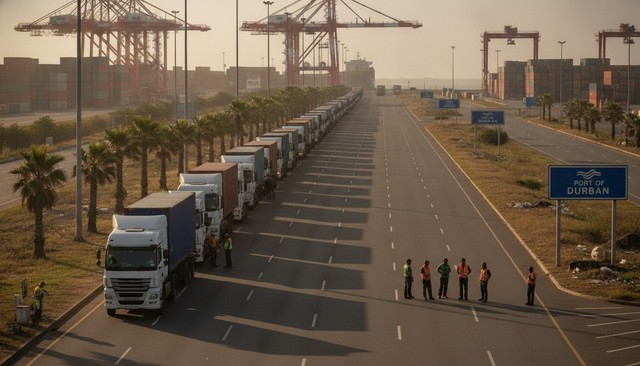
Durban Gateway Terminal has developed a fix for its troubled slot-booking system and will put it to industry for comment before implementation, while terminal storage charges are waived for as long as the current operational problems continue.
Transportation
12 September 2026 • 4 min read
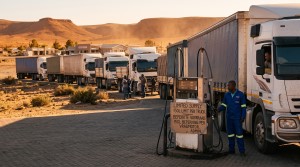
A slot booking is not an administrative detail. It is the single piece of data that decides whether a truck earns revenue that day or burns fixed cost standing on Bayhead Road. Durban's terminal operator has now conceded the system is not working and has agreed to redesign it in the open.
The South African Freight and Logistics Association (SAFLA) and the Road Freight Association (RFA) announced the development after a meeting between Durban Gateway Terminal (DGT), International Container Terminal Services Inc (ICTSI) and the organisations that move cargo through the terminal. DGT and ICTSI acknowledged the operational difficulties and set out short- and long-term measures.
The immediate measures are practical rather than structural. Terminal storage charges are being waived while the problems persist. An accelerated maintenance programme has been introduced to keep handling equipment running safely, and generators have been brought in to cover power disruptions. Equipment has been ordered, though the associations were told to expect lengthy delivery lead times — and that significant refurbishment and modernisation will be needed before the terminal can compete with other Southern African ports.
Scale of the disruption: DGT handled an average of 3 672 TEUs a day in the four weeks to 10 September, against 5 286 TEUs a day over the preceding four months — 30.5% below its own recent average. Road import containers on hand rose about 11% in four days, from 3 968 to 4 421. (Source: Busa Cargo Movement Update compiled by SAAFF, September 2026)
RFA chief executive Gavin Kelly put the transporter's position bluntly. "Transporters are carrying the costs of inefficiencies. Fleets are standing without bookings while fixed costs run, drivers are queuing on Bayhead Road, and every standing hour ends up in the price of goods." His closing line — "Without trucks, South Africa stops" — is a reminder that a container terminal's productivity problem becomes a road transport cash-flow problem within days.
Kelly made two specific asks. The first is that slot releases be aligned with the terminal's actual handling capacity rather than its theoretical capacity, because a slot issued against capacity that does not exist simply relocates the queue from the water to the road. The second is that truck-staging facilities be fast-tracked, so that waiting trucks are held somewhere designed for them instead of on a public road. He also suggested Transnet consider temporarily lowering container movement tariffs at alternative ports to draw pressure away from DGT while the upgrades are completed.
Durban is the gateway for a large share of containerised cargo destined for Gauteng, Botswana, Zimbabwe, Zambia and the southern Democratic Republic of Congo. A booking system that releases slots faster than the terminal can service them does not only affect local hauliers; it desynchronises every downstream leg, from inland consolidation to cross-border departure windows. By 10 September roughly 11 550 containers had been diverted to relieve pressure, and further diversion and network-management measures were continuing — which means cargo owners are already absorbing unplanned re-routing.
SAFLA representative Dave Logan welcomed the storage-charge waiver as meaningful relief for freight forwarders and their clients, and both associations offered member evidence and operational expertise to a joint recovery task team involving DGT, Transnet, government and other industry bodies. That offer is the part worth watching: a booking system redesigned with operator data behind it is far more likely to survive contact with a real gate queue than one designed in isolation.
Start recording standing time against every Durban booking now — date, slot issued, time in, time out — because the consultation on the new system will favour operators who arrive with evidence rather than complaints. Until slot releases are matched to real handling capacity, price Durban legs with a stated waiting-time assumption and a defined charge once it is exceeded, and keep a costed alternative-port option ready for shippers who can flex their gateway.
Stay connected with Southern Africa's freight and transport community.
Join 6,400+ logistics professionals across the SADC region.
Visit Laaimylorrie.com| About the Author | |

|
Andre Klynsmith Entrepreneur & Technology Enthusiast Andre's expertise spans technology, blockchain, transport, and logistics — with a passion for innovation and driving positive change across industries. |
| Source: Freight News View source › | 11 September 2026 |


Subscribe to our Newsletter and stay in the know with all the latest Industry News, Products and Trends covering the whole of the SADC region.
KS Blockchain T/A Laaimylorrie.com . All Rights Reserved.